



Bacterial Infection vs Fungal Infection
Bacterial Infection vs Fungal Infection

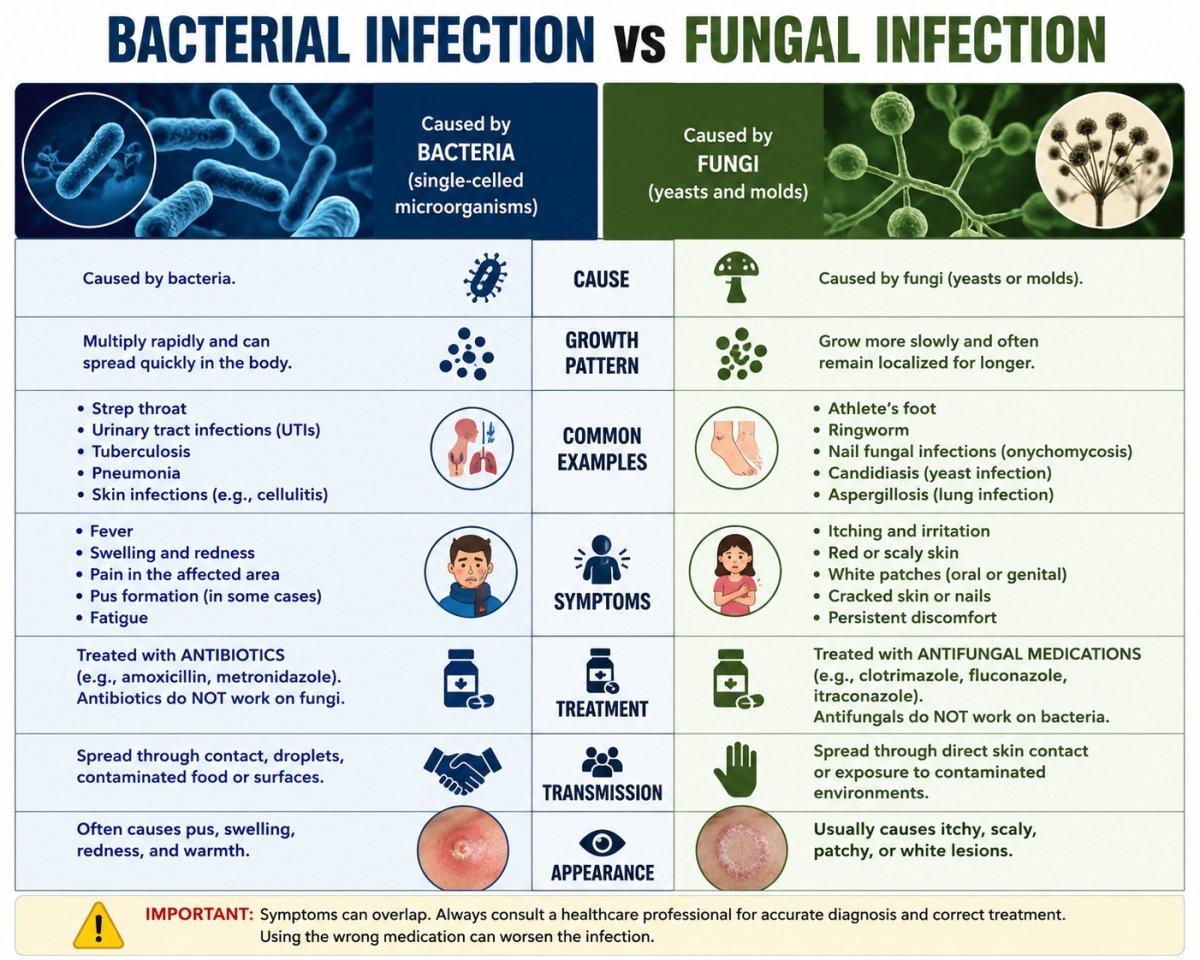


Infections are one of the most common health problems affecting people worldwide. Among them, bacterial and fungal infections are frequently confused because they can sometimes show similar symptoms such as redness, itching, swelling, or discomfort. However, both are completely different in their cause, behavior, and treatment approach. Understanding the difference between bacterial infection vs fungal infection is essential for choosing the right treatment and avoiding complications.
What is a Bacterial Infection?
Bacterial infections are caused by harmful bacteria—single-celled microorganisms that can multiply rapidly inside the body. Not all bacteria are harmful; in fact, many are beneficial for digestion and immunity. However, pathogenic bacteria can cause illnesses when they enter the body through cuts, contaminated food, water, or close contact.
Common bacterial infections include throat infections, urinary tract infections (UTIs), pneumonia, and skin infections. Symptoms may include fever, pus formation, localized pain, inflammation, and fatigue. Bacterial infections often progress quickly if not treated properly.
Doctors usually prescribe antibiotics to treat bacterial infections. One commonly used antibiotic is metronidazole, which is effective against various anaerobic bacterial infections and certain parasitic conditions. In some cases, people may look for options such as Buy Flagyl 200Mg online, especially when prescribed for conditions like gastrointestinal infections or dental infections. However, it is important to use such medications only under proper medical supervision to ensure safe and effective results.
What is a Fungal Infection?
Fungal infections are caused by fungi, which are organisms that thrive in warm, moist environments. Unlike bacteria, fungi can live on dead skin tissue, nails, and mucous membranes. While some fungi are harmless, others can cause infections when they grow uncontrollably.
Common fungal infections include athlete’s foot, ringworm, yeast infections, and nail fungal infections. Symptoms often include persistent itching, scaling, redness, cracked skin, and sometimes a white discharge in yeast infections.
Fungal infections are usually slow-growing compared to bacterial infections but can become chronic if ignored. They require antifungal medications rather than antibiotics. One widely used antifungal medicine is itraconazole, which helps treat various systemic and superficial fungal infections.
In treatment discussions, patients sometimes come across terms like buy itraconazole capsules 200 mg, especially when dealing with stubborn fungal conditions that affect skin, nails, or internal organs. Proper diagnosis is essential before starting antifungal therapy, as incorrect use can delay recovery.
Key Differences Between Bacterial and Fungal Infections
The main difference lies in their origin. Bacterial infections are caused by bacteria, while fungal infections are caused by fungi. Bacterial infections often develop rapidly and may cause fever and pus, whereas fungal infections usually grow slowly and cause itching, irritation, or skin changes.
Another major difference is treatment. Antibiotics are used for bacterial infections, while antifungal medications are required for fungal infections. Using the wrong medication can worsen the condition or make it harder to treat.
For example, antibiotics will not cure fungal infections, and antifungal drugs will not treat bacterial infections. This is why proper medical diagnosis is very important before starting any treatment.
Diagnosis and Treatment Approach
Doctors diagnose these infections based on symptoms, physical examination, and laboratory tests such as blood tests, cultures, or skin scrapings. Once the type of infection is confirmed, appropriate medication is prescribed.
For bacterial infections, antibiotics like metronidazole or amoxicillin may be used depending on the condition. For fungal infections, antifungals such as itraconazole, fluconazole, or topical creams are commonly recommended.
Self-medication should be avoided because misuse of antibiotics or antifungals can lead to resistance, making future infections harder to treat.
Prevention Tips
Good hygiene plays a key role in preventing both bacterial and fungal infections. Regular handwashing, keeping the skin clean and dry, wearing breathable clothing, and avoiding sharing personal items can reduce the risk significantly.
A healthy immune system also helps the body fight infections more effectively. Balanced nutrition, proper hydration, and regular exercise contribute to better immunity.
Conclusion
Bacterial infection vs fungal infection may seem similar in symptoms, but they are fundamentally different in cause and treatment. Bacterial infections are treated with antibiotics, while fungal infections require antifungal medicines. Understanding this difference is crucial for effective recovery and preventing complications.
What's Your Reaction?
 Like
0
Like
0
 Dislike
0
Dislike
0
 Love
0
Love
0
 Funny
0
Funny
0
 Wow
0
Wow
0
 Sad
0
Sad
0
 Angry
0
Angry
0













Comments (0)