



Which No Drill Bathroom Shelves and Shower Caddies Are Best for Textured Tiles?
Looking for bathroom storage without drilling into textured tiles? Explore no-drill bathroom shelves and shower caddies, learn about adhesive and mounting options, and discover tips for choosing secure, durable storage for your shower.
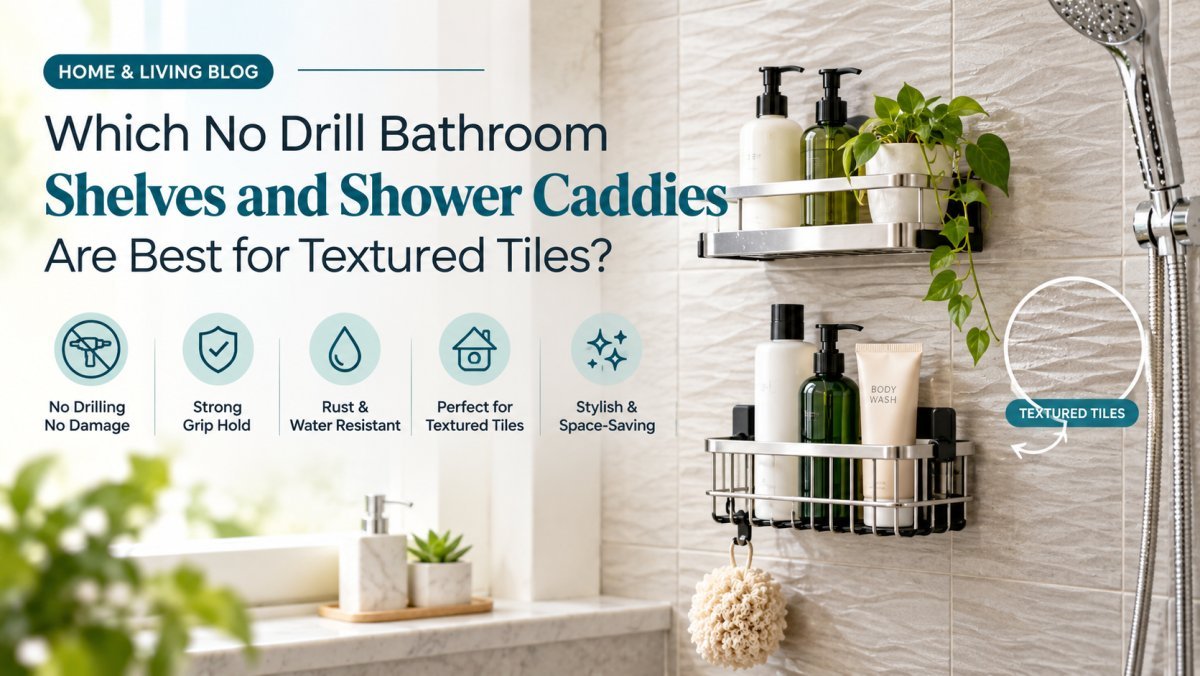


Textured shower tiles—such as tumbled slate, honed travertine, rustic matte porcelain, and faux-stone ceramics—add rich visual depth and slip resistance to modern bathrooms. However, their uneven, microscopic peaks and valleys present a notorious challenge when organizing shower essentials. Standard suction cups slide off within hours, and thin sticker adhesives peel away under the weight of wet shampoo bottles.
Drilling into expensive tile carries a permanent risk of cracking the glaze, fracturing the waterproofing membrane, or puncturing plumbing lines hidden behind drywall. Fortunately, modern adhesive engineering offers damage-free alternatives. Finding the right mounting mechanism and shelf profile allows you to create rock-solid shower storage on uneven and textured surfaces.
Quick Answer
The best no-drill bathroom shelves for textured tiles use specialized hybrid polymer adhesives or conforming nano-gel pads rather than standard suction cups. These gap-filling adhesives bridge microscopic surface unevenness, creating an airtight, waterproof seal that supports up to 30 pounds without drilling, cracking tiles, or slipping in steamy, high-humidity environments.
Why Do Traditional Suction and Adhesive Shelves Fail on Textured Tiles?
To solve the adhesion problem, it helps to understand why typical bathroom organizers detach from textured shower walls:
-
Microscopic Air Infiltration: Standard rubber suction cups rely on creating a vacuum seal against an optically flat plane (such as polished glass or smooth glazed ceramic). On textured, grooved, or tumbled tiles, tiny surface ridges prevent an airtight perimeter. Air seeps into the vacuum chamber, collapsing suction pressure within minutes.
-
Moisture Migration Behind Thin Film Tapes: Inexpensive double-sided foam strips lack elastic gap-filling properties. Because they only make contact with the "peaks" of textured tile, steam and liquid water run behind the adhesive through the "valleys," breaking down the glue emulsion.
-
Dynamic Shear Stress: Wet shampoo and body wash bottles place heavy downward shear force on bathroom caddies. When an adhesive bond is only partial, the weight peels the bracket from the top edge downward.
What Mounting Technologies Work on Textured Shower Tiles?
If you cannot drill into your tile, three mounting mechanisms successfully adhere to uneven, non-smooth surfaces:
1. Hybrid Polymer / MS Polymer Adhesives (Best Overall)
Modified Silane (MS) polymers and specialized marine-grade liquid adhesives represent the gold standard for textured tile installation. Applied as a bead from a tube, the viscous compound fills surface irregularities before curing into a semi-flexible, waterproof rubberized bond. It holds significant weight (20 to 40 pounds) and can be removed cleanly later by slicing the bond with dental floss or a utility razor and rubbing off residual silicone.
2. Thick Conforming Polyurethane Nano-Gel Pads
Unlike rigid clear tape, thick nano-polymer pads feature an elastic, rubbery layer (typically 1.5mm to 2mm thick). Under pressure, the gel conforms to shallow tile textures, undulating grout lines, and matte finishes, establishing broad surface contact that resists steam.
3. Dual-Plane Corner Wedging Systems
Corner installations leverage natural geometry. When a shelf mounts into a 90-degree corner, downward weight pushes outward against both adjacent walls. This distribution reduces the direct pull-away force on the adhesive anchors.
Choosing the Right Form Factor: Shelves vs. Baskets
Different items demand different organizer profiles. Matching your storage needs to the right shelf design prevents tipping and water stagnation:
    [ Corner Shower Shelf ]                     [ Deep Shower Basket ]
   90-degree structural wedging             High-walled perimeter security
     Best for: Compact stalls,                Best for: Large family pumps,
     soap bars, razors, corner spaces         loofahs, tall shampoo bottles
1. The Stability of a Corner Shower Shelf
Because shower corners are structurally rigid, a corner shower shelf takes advantage of dual-wall anchor points. Corner units keep bulky bottles out of your primary elbow room and remain shielded from the direct water stream, extending adhesive life.
2. The Containment of a Deep Shower Basket
If your household uses tall, 32-ounce pump bottles, a flat ledge is often inadequate. A deep, high-walled shower basket prevents tall toiletries from tipping over the edge when pressed. Open wire or slotted basket designs ensure soapy water drains immediately, preventing mold and scum rings.
3. Linear Multi-Tier Organizers
For broad, flat walls outside the corner, multi-tier no drill bathroom shelves provide expansive horizontal storage. These units allow you to organize facial cleansers, body washes, and sponges on dedicated levels without crowding vanity counters.
Performance Comparison: No-Drill Mounting Systems on Textured Tiles
The following comparison details how different mounting systems perform on textured, rough, and porous shower tiles:
| Mounting Mechanism | Surface Compatibility | Maximum Load Capacity | Steam & Humidity Tolerance | Removability / Tile Safety |
|---|---|---|---|---|
| Liquid MS Polymer / Structural Adhesive | Exceptional: Fills deep grooves, stone clefts, and textured porcelain. | 30–45 lbs: Accommodates multiple large pump bottles safely. | Immune: Impervious to constant hot water, steam, and soaps. | Safe: Cut with nylon thread; scrape residue without scratching tile. |
| Thick Conforming Nano-Adhesive Pads | Good: Performs well on light-to-medium matte textures and wavy tiles. | 15–25 lbs: Stable for standard bottles and daily shower accessories. | High: Seals moisture out if edges are burnished firmly upon install. | Very Clean: Peels away warm; leaves no sticky residue behind. |
| Tension-Pole Spring-Loaded Caddies | Fair to Good: Requires flat ceiling and floor; unaffected by wall texture. | 15–20 lbs: Distributed across 3 to 4 adjustable tier trays. | High: Mechanical hold unaffected by water, but metal poles can rust. | Zero Residue: Fully non-adhesive; requires zero chemical cleanup. |
| Standard Silicone Suction Cups | Fails on Texture: Requires microscopic smoothness; falls within hours. | 2–5 lbs: Only holds light items on perfectly glossy glass or polished tile. | Poor: Temperature fluctuations expand trapped air pockets, dropping seal. | Instant: Leaves no mark, but provides virtually no reliable hold. |
How to Install a No-Drill Shower Shelf on Textured Tiles
Proper surface preparation determines whether your shelf holds for five years or falls after five days:
-
Deep Clean with Isopropyl Alcohol: Scrub the tile surface with 70%+ isopropyl alcohol to strip away mineral deposits, shampoo oils, and soap scum. Avoid bathroom spray cleaners containing oils or silicone polishing agents.
-
Dry Completely with Heat: Moisture trapped inside the tile pores prevents adhesive bonding. Use a hairdryer on medium heat for two minutes to ensure the target area is bone dry.
-
Apply Gap-Filling Adhesive Generously: If using liquid polymer, apply thick vertical beads along the bracket backplate. If using adhesive pads, press from the center outward to force air out of surface crevices.
-
Respect the 48-to-72-Hour Cure Time: This is the most common point of failure. Modern polymer adhesives require 48 to 72 hours of moisture exposure to vulcanize into solid rubber. Do not place any bottles on your no drill shower shelf or expose it to direct water during this curing window.
Frequently Asked Questions
Can you use no-drill shelves on natural slate or travertine?
Yes, but only if you use a liquid hybrid polymer adhesive. Natural stone has porous, irregular clefts that suction cups cannot grip. Liquid adhesive enters the micro-pores and cures securely without causing structural damage.
Will adhesive strips damage my shower tile or grout when removed?
No. High-quality shower adhesives do not eat into glazed ceramics, porcelain, or natural stone. To remove them safely, soften the bond using heat from a hair dryer, slice through the adhesive layer using dental floss or fishing line, and roll away residual glue with your thumb or an alcohol swab.
Why did my adhesive shower shelf fall down after a week?
The two most frequent causes are loading the shelf before the adhesive cured (which takes 48 to 72 hours) and applying adhesive over invisible soap scum or mineral residues. Thorough cleaning with rubbing alcohol prior to mounting prevents premature detachment.
How much weight can a no-drill corner shower caddy safely hold?
When mounted with commercial-grade polymer adhesives on textured tile, a well-engineered corner caddy holds between 25 and 35 pounds. This is more than sufficient for 4 to 6 large liter-sized shampoo and conditioner bottles.
How do I prevent rust on my shower caddy?
Select organizers fabricated from space-grade anodized aluminum, 304 stainless steel, or solid brass. Avoid cheap chrome-plated steel wire, which rapidly corrodes along weld points in humid environments.
Are corner shelves sturdier than flat wall shelves?
Yes. Corner shower shelves gain extra stability because they anchor across two intersecting perpendicular planes. This dual-plane geometry reduces leverage and downward peel stress compared to flat, single-wall mounts.
Conclusion
You do not have to risk cracked tiles, punctured pipes, or lost rental deposits to achieve a clean, clutter-free shower. By matching high-performance gap-filling polymer adhesives with an ergonomically designed corner shower shelf or deep wall basket, you can enjoy dependable, heavy-duty storage on even the most textured tile walls. Explore the rust-proof, drill-free organization collections at Index Bath to find the ideal storage match for your bathroom layout.
What's Your Reaction?
 Like
0
Like
0
 Dislike
0
Dislike
0
 Love
0
Love
0
 Funny
0
Funny
0
 Wow
0
Wow
0
 Sad
0
Sad
0
 Angry
0
Angry
0

Index Bath is a premium bathroom brand committed to enhancing modern living through innovative design, exceptional quality, and lasting performance. Our collection of towel warmers, faucets, bathroom accessories, and lifestyle solutions is thoughtfully crafted to combine functionality with contemporary elegance. We believe every bathroom should be a space of comfort, style, and convenience, helping homeowners create environments that inspire relaxation and elevate everyday experiences. https://indexbath.com/







Comments (0)