



Embroidery Patch Machine in USA: Complete Buying Guide
Compare embroidery machines for patch making, explore essential equipment, and learn when to order custom embroidered logo patches instead.
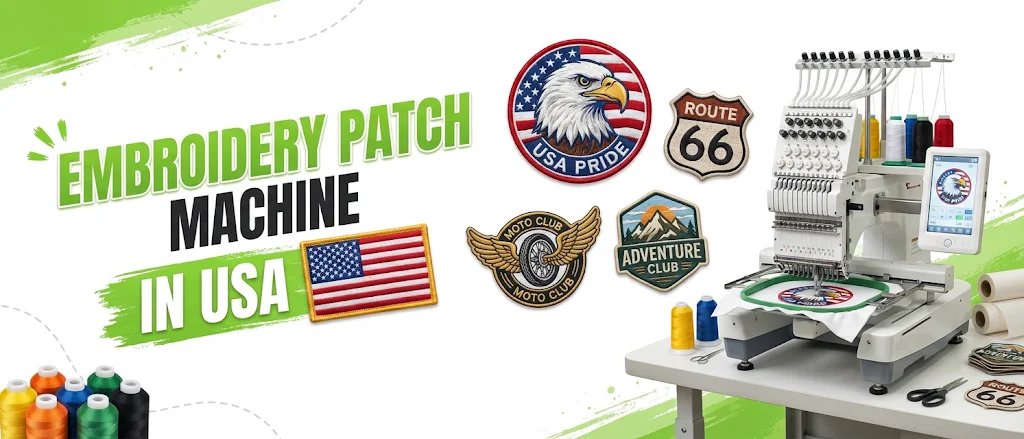


Embroidery Patch Machine in USA: A Complete Guide to Choosing Equipment
Choosing equipment for embroidered patches involves more than comparing machine prices. You need to consider the size of your designs, the number of items you expect to stitch, the materials you will use, and the finish required for each patch. Anyone researching an embroidery patch machine in USA should understand the complete process, from artwork preparation to stitching and final trimming. Equipment choice depends on these practical needs.
1. Identify Your Patch-Making Needs
List the patch types you plan to produce, such as company logos, name badges, team emblems, uniform identifiers, or jacket designs. Detailed artwork with small lettering and several colors can require more careful digitizing.
Estimate how many patches you expect to make each week or month. Occasional personal projects may not justify commercial equipment. Regular orders may require a machine and workflow that can handle repeated production. When comparing an embroidery patch machine in USA, consider design size and workload. The machine should match both.
2. Check the Embroidery Field and Hoops
The embroidery field is the area in which an embroidery patch machine in USA can actually stitch. It may differ from the hoop's outside dimensions. A compact field suits small badges, while a larger one accommodates wider emblems. Check this when selecting an embroidery patch machine in USA.
Check the maximum usable embroidery area in the machine specifications before buying an embroidery patch machine in USA. Measure the complete patch, including its border, rather than measuring only the central artwork. If it does not fit, you may need another machine or revised artwork.
A larger hoop can provide flexibility, but it may increase cost and require more workspace. Choose an embroidery patch machine in USA that supports the dimensions you need. This is a key factor when comparing suitable models.
3. Understand Single-Needle and Multi-Needle Options
Single-needle machines can suit beginners and people making limited quantities. They stitch many designs, but the operator usually changes thread colors manually. This is manageable for simple artwork but adds time when designs contain several colors.
Multi-needle machines hold several thread colors and change between them according to the stitch file. This can help with repeated multicolor work. They may suit frequent orders but usually require more investment, workspace, and maintenance. Consider this when choosing an embroidery patch machine in USA.
People comparing the best embroidery machine for patches should consider expected production volume, design complexity, experience, and support. A multi-needle model is not automatically necessary for a beginner. Compare the machine's configuration with your actual workflow before making a decision.
4. Look Beyond Maximum Stitching Speed
Machine speed is only one part of embroidery performance. Thread tension, needle selection, fabric stability, hooping, and the stitch file also influence results. Small lettering and narrow outlines may need slower settings than broad fills.
Before producing a large batch, stitch a sample using the intended fabric, thread, stabilizer, and backing. Check whether the lettering is readable, the fill areas look even, and the fabric remains flat. If the material puckers or the design appears crowded, the setup or digitized file may need adjustment.
The best embroidery machine for patches should support your designs and offer controls you can use confidently. Evaluate stitch quality as part of the entire production process.
5. Prepare the Necessary Supplies
An embroidery patch machine in USA is only one part of a complete patch-making setup that may also need hoops, needles, thread, fabric, stabilizer, trimming tools, and backing.
Twill is commonly used as a base because it provides a stable surface for many embroidered designs. Felt and other fabrics may suit particular decorative projects. Choose material according to its appearance, thickness, flexibility, and intended use when preparing work for an embroidery patch machine in USA.
Stabilizer helps limit movement during stitching. Select it for the fabric and design, and hoop the material securely without stretching it. Anyone researching an embroidery machine to make patches should include supplies in the budget and check which accessories are included.
6. Select Backing and Edge Finishing
Backing determines how a patch attaches. Sew-on backing is stitched to a garment. Heat-applied backing requires materials that tolerate the application temperature. Hook-and-loop backing suits removable patches.
The outside edge contributes to appearance. A satin-stitched border creates a defined outline, while a merrowed edge has a raised, wrapped finish made separately. Choose the finish before digitizing so the artwork leaves enough room around the design.
For workwear or uniforms, choose materials and attachment methods that suit how the garment will be used and washed. Explain these requirements before the design is prepared.
7. Understand Artwork and Digitizing
A regular image file is not automatically machine-ready. JPG and PNG files display artwork, while vector files preserve scalable shapes. The machine needs a stitch file with needle movement instructions. Confirm this requirement when choosing an embroidery patch machine in USA.
Digitizing converts artwork into machine-readable stitch instructions for an embroidery patch machine in USA. It involves planning stitch types, direction, density, underlay, sewing sequence, trims, and thread color changes. These decisions influence how the design behaves on the selected fabric and at the requested size. Small lettering, narrow gaps, and fine outlines may need simplification to remain clear when stitched.
When selecting an embroidery patch machine in USA, check which embroidery formats it supports. Confirm that the best embroidery machine for patches works with your chosen file format. DST, PES, JEF, and EXP are examples of formats used by different embroidery systems. Compatibility varies by machine and software, so consult the manual or provide the machine's make and model to the digitizing provider before requesting a file.
Send clean artwork with finished dimensions, fabric, placement, backing, border preference, and required file format. These details help the digitizer prepare suitable instructions.
8. Plan a Repeatable Production Workflow
A consistent workflow helps reduce mistakes when operating an embroidery patch machine in USA. Confirm artwork dimensions, prepare the stitch file, hoop the fabric and stabilizer, and stitch a sample. Then trim the patch and complete its edge and backing.
Keep the approved artwork, dimensions, thread colors, file format, and material choices on record. If a design changes, keep the revised file and specifications separate from the earlier version. Good record keeping makes repeat orders easier to manage.
People considering an embroidery machine to make patches should organize thread, needles, stabilizers, scissors, and finished pieces in a clear workspace.
9. When Ordering Finished Patches Is More Practical
Owning equipment is not the only way to obtain embroidered patches. If you need a small quantity, have limited workspace, or do not want to manage digitizing and finishing, ordering finished products may be more convenient. Searching for a custom embroidery logo patch in US can help you compare providers and understand their ordering requirements. A custom embroidery logo patch in US order should include clear artwork and size details.
Provide artwork, dimensions, quantity, colors, backing, border, and placement. Ask how proofs and revisions work, and check what the order includes.
When comparing a custom embroidery logo patch in US provider, check materials, attachment, edge finish, and proof approval before ordering. Clear specifications make it easier for the provider to understand the project and help you assess whether the offered result suits your needs.
10. Compare Total Ownership Requirements
Before buying, list your required embroidery field, hoop sizes, needle configuration, file formats, speed controls, workspace, and maintenance needs. Check training, technical support, and replacement-part availability.
The best embroidery machine for patches should fit your workload, budget, workspace, and experience. It is not necessarily the most expensive model or the one with the highest advertised speed. A practical machine is one that supports your designs and can be maintained reliably.
Frequently Asked Questions
Can a home embroidery machine make patches?
Yes. A suitable home machine can stitch small and medium designs that fit its field when the fabric is stabilized. Trimming and backing may require extra steps.
Do I need a multi-needle machine?
Not necessarily. A single-needle machine can work for occasional projects and designs with fewer color changes. Multi-needle equipment may be more convenient for frequent multicolor production. Choose according to workload, available space, and budget.
Which file format should I request?
Check the machine manual or manufacturer's compatibility information. DST, PES, JEF, and EXP are common examples, but not every model supports every format. Share your machine model with the digitizer if you are unsure.
Can I order patches without buying a machine?
Yes. You can work with a provider that supplies finished patches. Share your artwork, size, quantity, colors, backing, and border preferences, then review the proof before approving production. This helps clarify expectations for a custom embroidery logo patch in US.
Conclusion
Choosing equipment starts with an honest assessment of your projects and the requirements of an embroidery patch machine in USA. Compare embroidery area, hoops, needles, file compatibility, maintenance, and support. Fabric preparation, digitizing, backing, and finishing also affect the result.
Whether you plan to stitch patches yourself or order finished pieces, preparation is essential. Test a sample, keep a record of approved specifications, and choose a workflow that matches your order volume. A well-matched machine and carefully prepared stitch file provide a practical foundation for consistent patch work.
Ready to get started? Get a Free Quote Now or Contact Us today to turn your ideas into stunning embroidered art.
Author: Digit-it
Experts in Custom Embroidery Digitizing – Trusted by Clients Nationwide
Website: www.digit-it.com | Email: digitize@digit-it.com |
Contact: +1(231)-821-5515
WhatsApp: +44 7598 989500
Secure, Professional, and Committed to Quality – View our About Page and Contact Information for Trust & Support.
What's Your Reaction?
 Like
0
 Dislike
0
 Love
0
 Funny
0
 Wow
0
 Sad
0
 Angry
0
Digit-it specializes in embroidery digitizing and custom patch design, helping businesses and individuals bring their creative ideas to life. The company transforms logos, illustrations, and artwork into detailed machine-ready files, supporting personalized embroidery projects for clothing, uniforms, jackets, hats, bags, and accessories.






Comments (0)