



Best Tripod Stand for Food Photography & Recipe Videos
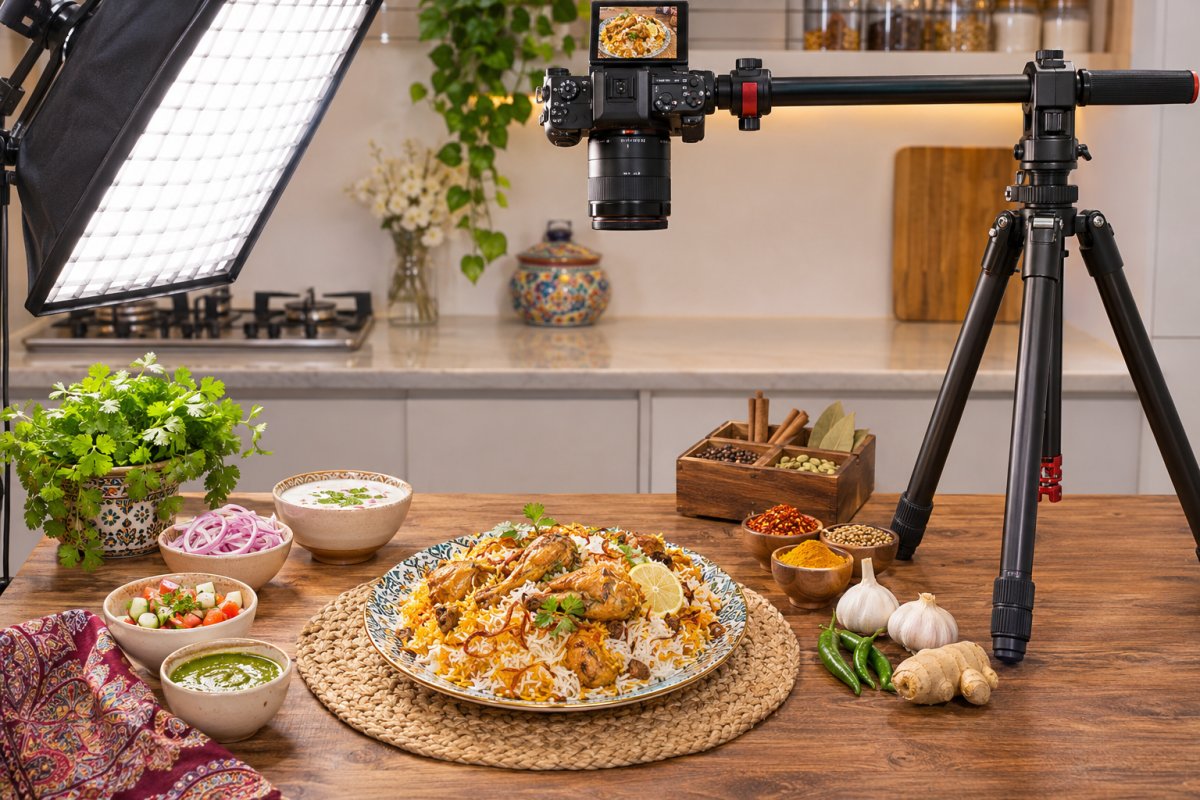


Food content looks simple until you try to film an entire recipe alone. One shot may need to show ingredients from directly above, another needs a close side angle of the finished dish, and the next needs enough space for your hands to chop, mix, pour, or plate food without hitting the camera.
That is why choosing the right tripod stand for food photography and recipe videos is different from choosing a basic tripod for travel or casual photography. Food creators need stability, useful overhead reach, safe camera positioning, enough working height, and a setup that does not block the cooking area.
For Pakistani food bloggers, YouTube recipe channels, restaurants, ecommerce sellers, and home creators producing Instagram Reels or TikTok-style recipe content, the right tripod can make filming faster and far more consistent.
What Makes a Tripod Suitable for Food Photography?
Food content normally uses three camera positions:
-
Directly overhead for ingredients and step-by-step preparation
-
A 30–45 degree angle for plated food and table scenes
-
Eye-level or low side angles for texture, steam, pouring, and serving shots
A basic fixed tripod may handle the second and third angles well, but true top-down recipe footage requires more flexibility.
Current Pakistan-focused tripod guides increasingly distinguish overhead systems from ordinary camera tripods. Horizontal center columns and dedicated overhead arms are specifically recommended for cooking, product demonstrations, flat lays, and tutorial content because they allow the camera to move away from the normal center of the tripod legs.
So, for food creators, the most useful tripod is usually not simply the tallest model. It is one that can move between conventional and overhead shooting without making your workspace difficult to use.
Best Tripod Type for Recipe Videos: Horizontal Center Column
For creators who want one stand for several shooting styles, a tripod with a horizontal or transverse center column is one of the most practical choices.
Instead of keeping the camera directly above the center of the tripod, the column extends outward. This allows the camera to point downward over a table or kitchen counter while the tripod legs remain away from the food preparation area.
Pakistan retailers currently market horizontal-axis and transverse-column models specifically for top-down food videos, product photography, tutorials, desk setups, and overhead content.
This setup is particularly useful for:
-
Biryani and curry preparation videos
-
Baking tutorials
-
Recipe ingredient layouts
-
Cake decorating
-
Beverage preparation
-
Food plating tutorials
-
Restaurant menu photography
-
Short-form cooking Reels
-
Hands-only recipe demonstrations
A horizontal column also makes it easier to return to approximately the same framing each time you shoot.
Why a Normal Tripod Is Not Always Enough for Overhead Food Shots
A conventional tripod keeps the camera close to the center of its three legs. If you simply tilt the camera downward, the legs may enter the shot or prevent you from moving the camera far enough over the table.
Extending a camera away from the tripod also changes the center of gravity. That is why stability becomes more important during overhead shooting.
Food-video tripod guidance consistently recommends a rigid horizontal arm, boom, desk clamp, or dedicated overhead support rather than assuming any standard tripod can safely create a top-down view.
If overhead food content will be a major part of your workflow, confirm that the tripod is specifically designed to support a horizontal shooting position.
Stability Comes Before Maximum Height
Many buyers compare tripods by maximum height first. For recipe content, stability is usually more important.
During food filming, you may be:
-
Chopping vegetables
-
Mixing ingredients
-
Moving plates around
-
Opening drawers
-
Adjusting lights
-
Working close to the tripod legs
A lightweight or poorly balanced stand can move when the floor or table is bumped. Even small movement is noticeable in a locked overhead video.
Look for:
-
Strong leg locks
-
Rigid leg sections
-
A stable leg spread
-
Reliable center-column locks
-
A sturdy camera head
-
Non-slip feet
-
A ballast or counterweight option where supported
Some professional overhead tripods sold in Pakistan also include ballast hooks or wider support systems specifically to improve stability.
If you are comparing general options first, Hope Enterprises’ guide to best tripod stands in Pakistan provides useful background on different tripod categories.
Check Load Capacity with Your Complete Camera Setup
Do not calculate weight using the camera body alone.
Your working setup could include:
-
Camera body
-
Lens
-
Quick-release plate
-
Cage
-
External monitor
-
Phone holder
-
Microphone
-
Small accessory light
The further a camera is extended horizontally, the more careful you should be about balance.
For smartphones, the load is relatively light. But a mirrorless camera with a heavier lens requires a stronger support system.
Choose a tripod whose rated payload comfortably exceeds your actual setup rather than operating close to its maximum limit. Retail guidance for horizontal tripods also emphasizes staying within the stated load and balancing the setup properly when the center column is extended.
How Much Height Do You Need for Food Videos?
The correct working height depends on what you are filming.
A tight overhead shot of a coffee cup needs less clearance than a full table showing several ingredients, cookware, and both of your hands.
Your required height depends on:
-
Table or counter height
-
Camera sensor size
-
Lens focal length
-
Phone camera field of view
-
Size of the food arrangement
-
Whether your hands need to stay inside the frame
More height generally gives you a wider top-down composition, while lowering the camera creates tighter framing.
Rather than buying only according to a tripod’s maximum height, think about how far the camera can actually extend above your food while remaining stable.

Phone Tripod vs Camera Tripod for Food Content
Your choice also depends on the device you use.
Smartphone Recipe Creators
A phone can be excellent for:
-
Instagram Reels
-
YouTube Shorts
-
TikTok-style cooking videos
-
Quick restaurant content
-
Behind-the-scenes clips
Because phones are lightweight, you have more mounting options. However, the phone holder and arm should still lock securely.
Cheap flexible stands may work for occasional tabletop angles, but they are not automatically suitable for suspending a phone safely above hot pans or active cooking areas.
Mirrorless and DSLR Users
A camera setup requires stronger legs, a better head, and higher load capacity.
It is often the better option for:
-
Restaurant photography
-
Commercial recipe videos
-
Menu photography
-
Food advertising
-
YouTube cooking channels
-
Client content production
If you regularly use cameras and accessories, the guide to digital camera accessories for content creators can help you plan the rest of the setup around your camera.
Ball Head, Video Head or Overhead Mount?
Food creators do not always need the same tripod head.
Ball Head
A ball head is fast to reposition and useful for photography. It works well when switching between overhead and angled food photos, provided it locks firmly.
Pan-and-Tilt Head
This gives more controlled adjustments on individual axes and can help when carefully aligning a plate, cutting board, or table arrangement.
Video Head
A video head is useful if your recipe content includes deliberate camera movement, such as slow pans across ingredients or a finished table.
For static overhead recipes, however, secure locking is usually more important than cinematic movement.
Leave Enough Space to Cook Comfortably
A technically perfect overhead angle is useless if the tripod prevents you from cooking.
Think about where the legs will sit before recording.
The setup should leave enough room to:
-
Stand naturally at the counter
-
Reach ingredients
-
Move bowls and pans
-
Open cabinets
-
Plate food
-
Adjust styling
This is another advantage of a horizontal center column: the tripod can stand beside the workspace rather than directly underneath the camera.
For permanent studio setups, a desk-mounted overhead arm or dedicated overhead support can free even more floor space. Current Pakistan tripod guides describe dedicated overhead mounts as especially useful for fixed flat-lay, product, and cooking studios.
Keep the Tripod Away from Heat, Steam and Splashes
Recipe filming adds risks that do not exist in ordinary tabletop photography.
Avoid placing the camera or tripod directly above:
-
Open flames
-
Boiling oil
-
Heavy steam
-
Deep frying
-
Splattering sauces
-
Extremely hot cookware
Even if the framing looks good, equipment should never compromise kitchen safety.
A better workflow is to record preparation and plating overhead while using a side angle for high-heat cooking stages.
Steam can also temporarily affect lens clarity, while grease can accumulate on equipment during repeated kitchen shoots. Keep reasonable distance between your camera and active cooking surfaces.
Lighting Matters Just as Much as the Tripod
A stable frame solves camera movement, but it cannot fix poor lighting.
For appetizing food content, creators often use a soft key light from the side or slightly behind the food. This helps create texture in items such as bread, rice, grilled meat, desserts, and sauces.
Avoid relying entirely on harsh ceiling lights, as they can create unwanted shadows or make food appear flat.
If you are building a complete home setup, Hope’s guide to photo studio lights for content creators covers lighting types, positioning, and setup considerations in more detail.
A Practical Two-Angle Recipe Video Setup
One of the easiest workflows is to plan two main camera positions.
Angle 1: Overhead
Use it for:
-
Ingredient introductions
-
Mixing
-
Chopping
-
Dough preparation
-
Garnishing
-
Step-by-step demonstrations
Angle 2: 45-Degree or Side View
Use it for:
-
Pouring
-
Frying
-
Steam
-
Serving
-
Final beauty shots
-
Texture close-ups
You do not necessarily need two cameras. A flexible tripod allows you to reposition one camera between stages.
For creators publishing several recipes every month, marking your tripod position on the floor can help recreate consistent framing quickly.
Features Worth Prioritizing When Buying
For food photography and recipe videos, prioritize these features in roughly this order:
1. Overhead capability
A horizontal center column or compatible boom system is extremely useful.
2. Stability
The tripod should remain steady when you work around it.
3. Load capacity
It must safely support your complete phone or camera setup.
4. Secure head
The camera should not gradually tilt after you frame the shot.
5. Adjustable height
Useful for switching between tight and wide food compositions.
6. Quick-release system
Helps you move rapidly between overhead and side-angle shooting.
7. Compact footprint
Especially important for small Pakistani kitchens and home studios.
8. Accessory compatibility
Useful if you later add phone mounts, monitors, or other creator accessories.
Common Mistakes Food Creators Should Avoid
Buying Only by Price
A cheap tripod that cannot safely produce the angle you need is not good value.
Assuming Every Tall Tripod Can Shoot Overhead
Height and horizontal reach are different features.
Extending the Arm Too Far
More reach increases leverage and can reduce stability. Keep the setup balanced.
Ignoring the Lens Weight
A heavier lens can shift the camera’s center of gravity significantly.
Blocking Your Own Workspace
Test where you will stand, cook, and move before finalizing the camera position.
Positioning Equipment Directly Over Heat
Safety should always take priority over the shot.

Which Tripod Setup Is Best for You?
For phone-only creators, look for a stable overhead-compatible stand with a secure smartphone holder.
For YouTube cooking channels, a full-size tripod with a horizontal column gives more flexibility as your equipment grows.
For professional food photographers, prioritize load capacity, precise positioning, a dependable head, and strong construction.
For permanent recipe studios, consider whether a dedicated overhead support combined with a conventional tripod would make the workflow faster.
The best setup is not necessarily the biggest. It is the one that safely supports your equipment while giving you the angles your food content actually requires.
Final Thoughts
The best tripod stand for food photography and recipe videos should make your workflow easier rather than simply hold a camera.
For most creators, the most valuable features are overhead capability, solid construction, sufficient load capacity, flexible height, and a secure camera head. A horizontal center column is especially useful because it allows you to move from standard food photography to true top-down recipe recording without needing an entirely separate setup.
Before buying, think about your camera weight, kitchen space, table height, typical recipe style, and whether you mainly produce photos, long-form YouTube videos, or short vertical content.
Choose around those real requirements and you will have a tripod that can support everything from ingredient preparation and cooking demonstrations to polished final-dish photography.
FAQs
What tripod is best for overhead food photography?
A tripod with a horizontal or transverse center column is one of the most practical options because it can position the camera directly above the food while keeping the tripod legs beside the table.
Can I use a normal tripod for cooking videos?
Yes, for side angles and standard framing. For true overhead recipe shots, however, a tripod with horizontal extension or a dedicated overhead mount is usually easier to position.
Can I use a phone tripod for recipe videos?
Yes. A stable phone tripod can work well for Reels, Shorts, and recipe videos, especially if it supports secure top-down positioning. Avoid unstable mounts around hot cooking surfaces.
What should I check before buying a tripod for food photography?
Check overhead capability, load capacity, stability, working height, horizontal reach, tripod-head strength, quick-release design, and how much floor space the tripod needs.
Is an overhead tripod useful for YouTube cooking videos?
Yes. Overhead framing is especially useful for showing ingredients, chopping, mixing, decorating, plating, and other hands-on recipe steps clearly to the viewer.
What's Your Reaction?
 Like
0
 Dislike
0
 Love
0
 Funny
0
 Wow
0
 Sad
0
 Angry
0

Hope Enterprises is Pakistan’s trusted authorized distributor of SIGMA, Ulanzi, Audio-Technica and Hollyland. Established in 1995, we provide genuine cameras, lenses, microphones, tripods, lighting, headphones and creator accessories with official brand warranty. Shop online or visit our camera shop in Lahore for reliable products, expert guidance and nationwide service for photographers, videographers and content creators.








Comments (0)