



Effluent Water Treatment Plant Supplies: A Guide to ETP Instruments and Calibration Equipment for Pakistani Industries
Explore essential ETP instruments and calibration supplies for Pakistani industries. Learn how to select compatible sensors, flowmeters and monitoring equipment, maintain measurement accuracy and support reliable industrial wastewater treatment systems.

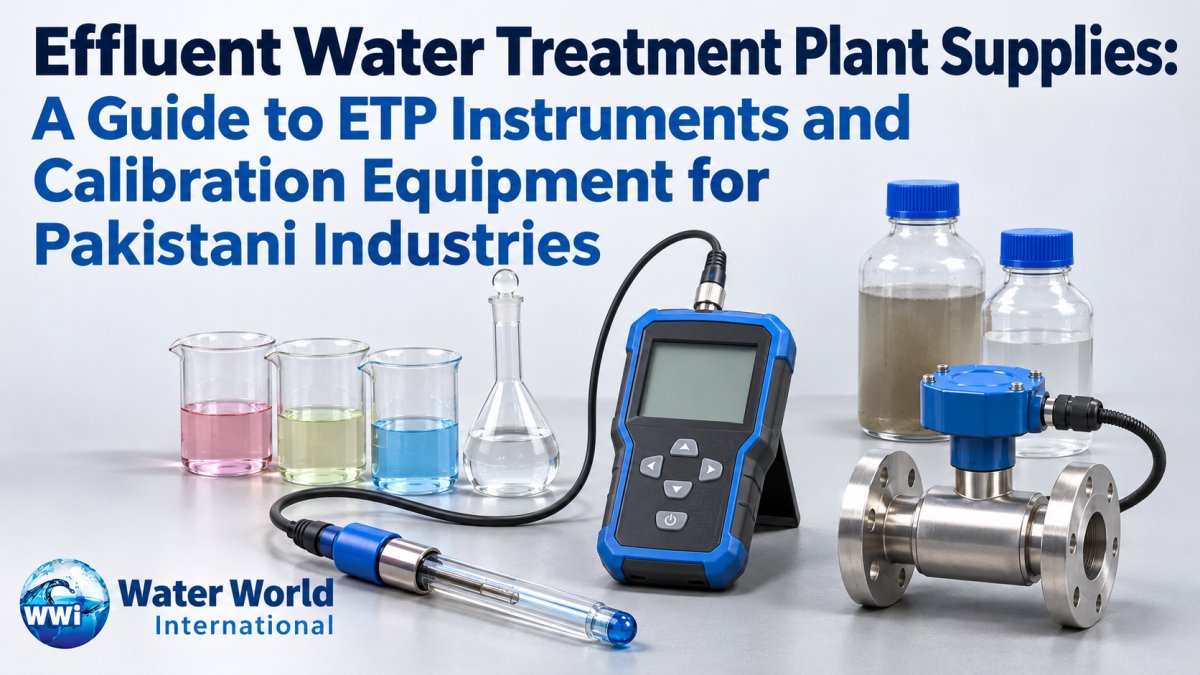


A wastewater treatment plant can develop serious operating problems even when its mechanical equipment appears to work normally. Sometimes, the issue begins with an inaccurate sensor or an unreliable flow measurement.
Purchasing Effluent Water Treatment Plant Supplies therefore requires careful attention to monitoring instruments, technical specifications, and calibration requirements.
For Pakistani factories, ordering an incompatible sensor can create unnecessary expenses and delay essential maintenance. Incorrect measurements may also lead operators to make unsuitable treatment adjustments.
Understanding instrumentation requirements helps procurement teams purchase suitable equipment while supporting more reliable wastewater treatment operations.
Effluent Water Treatment Plant Supplies: Why Accurate Instrumentation Matters
Understand the Role of Measurement Instruments in Industrial ETPs
Monitoring instruments provide information about wastewater conditions that operators cannot determine through visual inspections alone.
A pH sensor measures acidity or alkalinity. A flowmeter records wastewater movement, while dissolved oxygen instruments help operators assess biological treatment conditions.
These measurements support chemical dosing, equipment operation, and treatment decisions.
Without reliable instrumentation, operators may struggle to understand why treatment performance changes during manufacturing activities.
Recognize the Risks of Inaccurate Wastewater Measurements
An inaccurate instrument can create several operational problems.
For example, an unreliable pH reading may lead operators to adjust chemical dosing unnecessarily.
Other potential consequences include:
-
Increased chemical consumption.
-
Misleading treatment performance records.
-
Unnecessary equipment maintenance.
-
Incorrect operational decisions.
-
Delayed identification of wastewater treatment problems.
Regular instrument checks help maintenance teams distinguish actual process changes from measurement errors.
Identify Instruments Based on Treatment Process Requirements
Not every industrial ETP needs the same monitoring equipment.
Chemical treatment systems may require different instruments from biological treatment plants or membrane filtration systems.
Review the existing treatment configuration before preparing an equipment purchase list.
Essential Wastewater Monitoring Instruments for Industrial Treatment Plants
Industrial pH Sensors and Conductivity Meters
Industrial pH sensors help operators monitor wastewater acidity and alkalinity throughout suitable treatment stages.
Conductivity meters measure how readily water conducts electricity. These readings can help identify changes in dissolved ionic substances.
For textile factories, conductivity monitoring may provide useful information about changing wastewater characteristics during production.
However, conductivity readings cannot identify every dissolved chemical or establish complete wastewater quality.
Select instruments according to their intended measurement application.
Dissolved Oxygen Meters and Turbidity Sensors
Dissolved oxygen meters are particularly useful in aerobic biological treatment systems.
They help operators understand whether oxygen availability matches established process requirements.
Turbidity sensors measure how suspended and other light-scattering materials affect water clarity.
These instruments may help identify changes in treated-water quality or filtration performance.
However, turbidity measurements cannot replace laboratory testing for COD, BOD, or other relevant contaminants.
Wastewater Flowmeters and Tank-Level Instruments
Accurate flow measurements help factories understand incoming wastewater volumes and treatment plant loading.
Tank-level instruments support storage monitoring and equipment control.
When purchasing these instruments, consider:
-
Expected minimum and maximum flow rates.
-
Wastewater solids content.
-
Pipe dimensions and installation conditions.
-
Required measurement accuracy.
-
Maintenance and cleaning accessibility.
The appropriate measurement technology depends on the application. A flowmeter designed for clean water may not suit wastewater containing substantial solids.
Check Technical Specifications Before Purchasing ETP Instruments
Verify Measurement Range, Accuracy and Operating Conditions
Before requesting quotations, establish the conditions under which the instrument will operate.
Check the required measurement range, accuracy, operating temperature, and pressure limitations.
For example, purchasing a pH sensor without considering wastewater temperature or chemical exposure may result in premature deterioration.
Request the manufacturer's technical datasheet rather than relying entirely on a short product description.
Also distinguish measurement resolution from accuracy. A display showing additional decimal places does not necessarily provide more accurate readings.
Confirm Sensor Compatibility with Existing Control Systems
A replacement instrument must work with the factory's existing monitoring and control arrangements.
Check electrical requirements, signal outputs, communication protocols, cable connections, and transmitter compatibility.
An instrument providing a 4–20 mA output may require different connections from one using digital communication.
For factories operating older treatment plants, compatibility deserves particular attention before ordering imported replacement components.
Maintenance engineers should confirm these details alongside the procurement department.
Evaluate Construction Materials and Chemical Resistance
Wastewater instruments may experience exposure to corrosive substances, treatment chemicals, suspended particles, and changing temperatures.
Review sensor materials, protective housings, seals, and process connections.
When purchasing Effluent Water Treatment Plant Supplies, match equipment specifications with the actual wastewater characteristics and installation requirements.
A lower-priced instrument offers limited value if its materials cannot withstand normal operating conditions.
Understand Calibration Supplies and Instrument Maintenance Requirements
Select Appropriate Calibration Solutions and Reference Standards
Calibration helps establish whether an instrument provides measurements within acceptable limits.
Different instruments require different calibration materials and procedures.
Industrial pH sensors may require suitable buffer solutions. Conductivity meters need reference standards appropriate to their measurement range.
Before purchasing calibration supplies, check:
-
Compatibility with the instrument model.
-
Required reference values.
-
Product expiry dates.
-
Recommended storage conditions.
-
Available traceability documentation.
Follow manufacturer instructions and applicable measurement procedures. Expired or contaminated reference solutions can undermine calibration reliability.
Maintain Calibration Records and Measurement Reliability
Calibration records help supervisors understand whether an instrument remains suitable for its intended duty.
Record the instrument identification, calibration date, reference materials used, verification results, and responsible technician.
Keep information about adjustments and previous measurement problems.
These records can help identify instruments that experience repeated drift or require increasingly frequent attention.
They also support maintenance planning and internal environmental recordkeeping.
Determine When Sensors Require Cleaning, Calibration or Replacement
An unstable reading does not automatically mean a sensor needs replacement.
Deposits, damaged cables, unsuitable installation conditions, or contaminated measuring surfaces may affect instrument performance.
Inspect the equipment and follow approved cleaning procedures before deciding whether further calibration is necessary.
However, calibration cannot repair physically damaged sensors.
Replacement may become appropriate when approved maintenance cannot restore acceptable measurement performance.
Prepare an Accurate ETP Instrumentation and Supplies Enquiry
Before contacting a supplier, gather the existing instrument model, measurement range, required accuracy, operating conditions, and electrical specifications.
Include equipment photographs, technical datasheets, installation dimensions, calibration requirements, and required quantities.
For businesses in Karachi, Lahore, Faisalabad, and other industrial areas, delivery location and replacement urgency should also be communicated.
A complete enquiry helps suppliers identify suitable equipment options and reduces unnecessary purchasing delays.
Need monitoring instruments or replacement equipment for your industrial ETP?
Share your technical specifications with Water World International. Discuss suitable equipment requirements, compatibility, and current availability before placing an order.
Frequently Asked Questions
Which Monitoring Instruments Are Commonly Used in Industrial Effluent Treatment Plants?
Common instruments include pH sensors, conductivity meters, dissolved oxygen probes, turbidity sensors, flowmeters, and tank-level instruments. Actual requirements depend on the treatment process and operating conditions.
How Often Should Industrial ETP Instruments Be Calibrated?
Calibration frequency depends on manufacturer recommendations, operating conditions, measurement stability, and applicable quality requirements. Instruments experiencing frequent drift or heavy contamination may require additional attention.
What Should Buyers Check Before Ordering Replacement pH or Dissolved Oxygen Sensors?
Check measurement range, sensor technology, operating temperature, construction materials, electrical connections, and transmitter compatibility. Confirm installation dimensions and calibration requirements before approving the purchase.
Why Are Calibration Records Important for Wastewater Treatment Operations?
Calibration records help establish measurement reliability and identify recurring instrument problems. They support maintenance decisions, operational investigations, environmental documentation, and planning for equipment replacement.
What's Your Reaction?
 Like
0
 Dislike
0
 Love
0
 Funny
0
 Wow
0
 Sad
0
 Angry
0





Comments (0)