



How can Thanksgiving Packaging make a place setting gift easier to use?
Table gifts need clear names and separated contents; customized tuck cartons should fit favors and simplify assembly, closure, and opening.
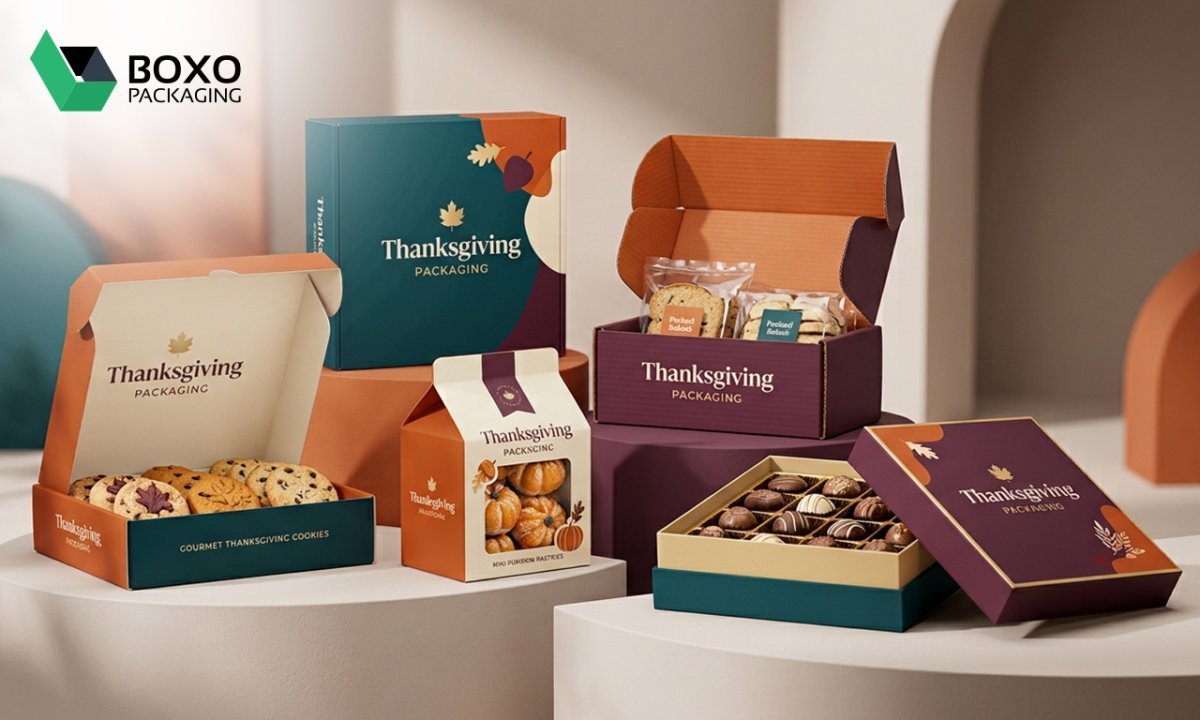


A small seasonal pack should identify the favor, fit the table setting, and open without scattering its contents. Thoughtful Thanksgiving Packaging balances the holiday message with those practical details. A place card, sealed sweet, and small keepsake may share one pack, but each needs an intentional position.
At a community dinner, a favor can become clutter if it occupies too much of the plate or must be dismantled before guests can sit down. Begin by testing a full place setting. The box should have a defined location rather than forcing cutlery, glasses, and name cards into the remaining space.
Decide whether the package replaces the place card
Combining the guest name with the favor can reduce the number of separate pieces on the table. It also changes production: names vary while the seasonal artwork stays fixed. Reserve a label area or writable panel and test the actual pen or label stock against the chosen surface.
If seating changes late, removable name labels may be more practical than printing every name directly onto a finished carton. That is a workflow choice, not a universal recommendation. Consider who will update the seating plan and how the favors will be sorted before the event.
Define the table gift with four separate decisions:
- Choose a position where the carton will not obstruct the guest's glassware.
- Keep the guest name visible without requiring the package to be opened.
- Package edible favors appropriately rather than relying on decorative tissue alone.
- Provide an opening that does not require guests to untie several attachments.
Keep edible and nonedible contents distinct
A wrapped caramel and a small scented ornament should not simply be placed loose together. Keep food in suitable primary packaging and consider whether the nonfood component belongs in a separate compartment or separate package. A divider organizes contents but is not necessarily a barrier to odor or migration.
Materials intended to touch food need to match the actual contact conditions. When ordering custom-printed carton boxes, verify the planned use of each box type. Dry wrapped candy, exposed oily confections, and hot foods cannot be used interchangeably.
If you have a small favor that would fit into a Pillow Box, or if you want to display your flat keepsake on a backing card with a shallow Sleeve Box, those options are good. However, if you are giving away only one wrapped sweet, then using a larger Gift Box is too much. You should try to find the smallest possible arrangement by trying out different configurations rather than making your boxes smaller until your employees can't get anything in them.
For table gifts, Thanksgiving Packaging succeeds when the festive design and the seating function coexist without confusion. The guest should immediately recognize the name and understand which contents are edible. There is no need to add another decorative element if it makes either task harder.
Custom Tuck Boxes Adjusted to the Real Assembly Sequence
A custom carton can adjust internal dimensions, opening position, flap details, and product support to suit a specific favor. With Custom Tuck Boxes, customization should address those functional needs as well as graphics. The finished design must still be practical to form, fill, close, and open.
A narrow keepsake pin on a backing card may need a carton with a different depth from a small chocolate pack. Matching their outside appearance does not require forcing both into the same interior. Shared artwork can link the favors while each structure follows its contents.
Make the dieline reflect the packing order
Write down the intended sequence before approving the drawing. Does the backing card enter first, followed by the sweet? Is the guest label applied before or after filling? Could an insert cover the lower flap and stop it seating correctly? These questions reveal changes that a flat visual cannot show.
A tuck end needs room to engage. If the product presses directly against the flap, staff may compensate by bending the card or squeezing the contents. Increase the relevant clearance or revise the support rather than building that workaround into the process.
Ask the trial packers to check these points:
- Whether the opening lets them insert the contents in the intended order.
- Whether the inner card stays below the closing flap's movement path.
- Whether left and right side flaps fold without catching an insert corner.
- Whether completed favors remain correctly oriented when placed on the table.
Specify print details that survive handling
Small cartons leave limited room for type. Keep the guest-facing message concise and use the other panels only for information that genuinely belongs there. Essential food information should remain legible; shrinking it to preserve a large illustration is not a sound tradeoff.
If the carton includes a thumb notch, check its position against the product and artwork. A notch may assist access, but it should not expose a sharp accessory or interrupt the guest name. Formed samples make these relationships easier to judge than enlarged screen proofs.
A brief for Boxo Packaging should include the filled component sizes, seating-label method, and assembly sequence. Request a structural sample before final artwork approval. The sample can reveal whether a standard Folding Carton is sufficient or an insert is justified.
Use Custom Tuck Boxes to remove unnecessary packing steps, not to create them. Once the contents, label, and closure work together, stop adding complexity. A favor that staff can prepare consistently and guests can open easily has fulfilled its purpose.
What's Your Reaction?
 Like
0
 Dislike
0
 Love
0
 Funny
0
 Wow
0
 Sad
0
 Angry
0

Boxo packaging one of the top-rated custom packaging box providers that offer a lot of customization options according to your product's look and need, be it high-end packaging or Eco-friendly. We also provide assorted sizes of wholesale order boxes according to the requirements of our clients.











Comments (0)