



How Feature Walls Can Improve Both Style and Acoustics
Feature walls can do more than add visual interest. Explore how timber slats, acoustic panels, lighting and thoughtful material selection can create feature walls that improve both interior style and acoustic comfort.

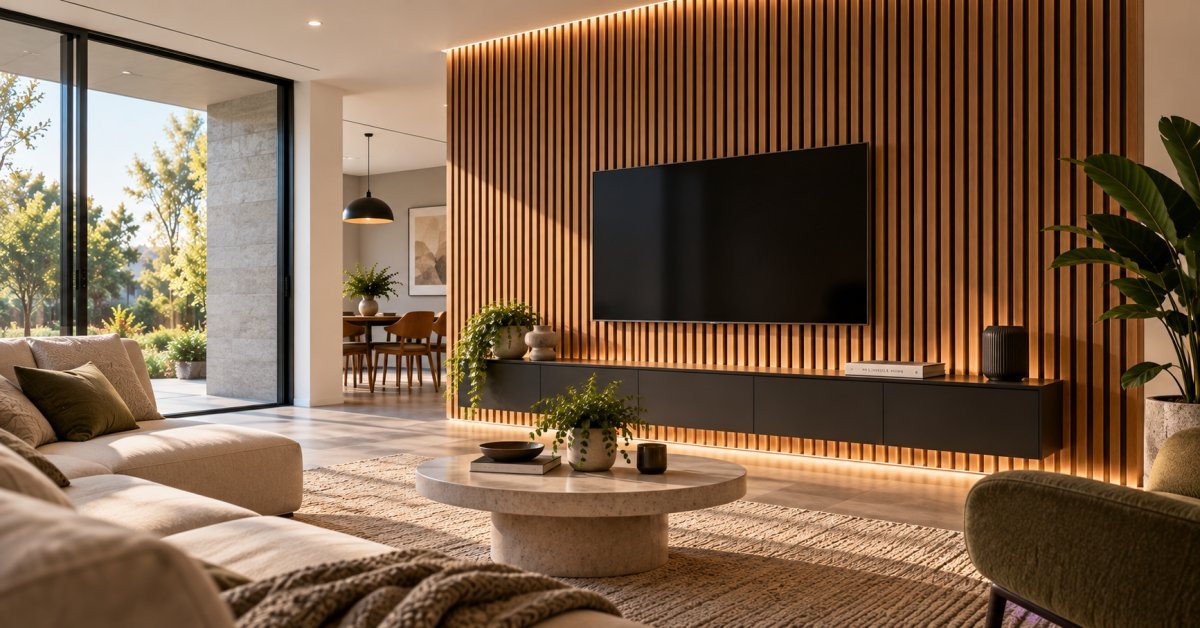


A feature wall can completely change the character of a room. It can add depth to a plain interior, create a visual focal point and help connect different materials throughout a space.
But a feature wall does not have to be purely decorative.
With the right materials and design, it can also contribute to better room acoustics. This makes feature walls particularly interesting for modern homes, offices, hospitality spaces and other interiors where appearance and comfort need to work together.
Why Feature Walls Work So Well
Large uninterrupted walls can make an interior feel visually flat. They can also provide a broad surface for sound to reflect from.
Introducing texture, depth and different materials changes the character of the wall.
A feature wall can use timber, fabric, textured panels, slats or other architectural finishes to create visual variation. Depending on the material and construction, some of these systems can also help manage sound reflections.
This creates an opportunity to solve two design requirements with one element.
From Decoration to Function
Traditional feature walls were often created with paint, wallpaper or decorative finishes.
Modern interiors have considerably more options.
Timber slats, textured wall panels and acoustic systems can provide depth while contributing to the room's overall performance. The key is choosing a system that is appropriate for the intended acoustic purpose rather than assuming that every decorative wall panel provides significant sound absorption.
This distinction is important when designing a room where acoustics are a genuine priority.
Wood Slat Walls and Acoustic Design
Wood slat walls have become a popular architectural detail because they can introduce warmth without making a room feel visually heavy.
The repeated vertical lines can create rhythm across a large wall and work well with contemporary furniture, natural materials and neutral colour palettes.
When a slatted system incorporates an appropriate acoustic backing, it can also contribute to sound absorption.
This makes wood slat acoustic panels particularly useful for spaces where a designer wants acoustic treatment without losing the warmth of a timber-inspired interior.
Where a Feature Wall Can Make the Most Difference
Not every wall needs to become a feature.
Choosing the right location is more important than simply covering a large surface.
Behind a Television
A media wall is already a natural focal point. Adding a textured or slatted treatment can give the area more architectural character while providing an opportunity for acoustic treatment.
The surrounding furniture and equipment should still be considered so that the wall does not become visually overcrowded.
Behind a Desk
A home office or executive workspace can benefit from a feature wall behind the desk.
This creates a strong background for video calls and gives an otherwise plain wall a clear purpose. Acoustic treatment can also help manage reflections in a room used for frequent conversations and meetings.
Behind a Reception Desk
Reception areas often create the first impression of a business.
A feature wall can incorporate branding, lighting and architectural materials while helping manage sound in an area where conversations frequently take place.
In Dining and Hospitality Areas
Restaurants, cafes and hospitality venues need to balance atmosphere with acoustic comfort.
A decorative wall treatment can become part of the venue's identity while contributing to the overall acoustic strategy.
How Acoustic Panels Fit Into Feature Wall Design
Acoustic panels do not need to dominate the room.
They can be used as a complete feature wall or combined with other materials to create a more layered design.
For example, a designer might combine timber-style slats with painted walls, stone, indirect lighting or greenery. Another interior might use a neutral acoustic surface that blends almost completely into the surrounding architecture.
The choice depends on whether the wall is intended to be subtle or become the main visual feature.
Think About Proportion
A common mistake with feature walls is choosing a material without considering the scale of the room.
A very busy pattern can overwhelm a small space, while a subtle finish may disappear on a very large wall.
Proportion matters acoustically as well.
The amount of acoustic treatment required depends on the room, its surfaces and the level of reverberation. Covering one small section of wall may have a limited effect in a very large reflective room.
For that reason, the visual design and acoustic strategy should be considered together.
Feature Walls in Open-Plan Interiors
Open-plan spaces can benefit particularly well from functional feature walls.
A single wall can visually define a living area, dining zone, workspace or meeting space without physically closing the room.
The feature wall can therefore act as an architectural boundary while also contributing to acoustic control.
This is useful in contemporary homes and offices where maintaining an open layout is important.
Choosing Acoustic Panels for Brisbane Interiors
In Brisbane interiors, material selection often needs to work with bright natural light, contemporary architecture and a mix of indoor and outdoor spaces.
When considering acoustic panels Brisbane, designers should look at the room's existing materials and determine whether the panels should blend into the interior or provide contrast.
Colour, texture, profile and installation method all affect the final appearance.
Acoustic performance should also be reviewed rather than assuming that a visually attractive panel will automatically provide the required level of sound absorption.
What to Look for From a Supplier
The appearance of a panel is only one part of the decision.
When comparing acoustic panels suppliers in Brisbane, it is useful to review product construction, available finishes, dimensions, installation requirements and acoustic information.
For residential projects, visual compatibility may be the primary consideration. Commercial spaces may require additional attention to durability, occupancy and the acoustic characteristics of the room.
Understanding the intended application makes it easier to select a product that is appropriate for the project.
Lighting Can Change the Entire Feature Wall
Lighting is often overlooked when designing a feature wall.
Linear lighting placed between or alongside slats can emphasise texture. Wall-washing can highlight a textured surface, while concealed LED lighting can create a softer architectural effect.
Lighting should be planned alongside the wall treatment rather than added later.
This is particularly important with textured materials because shadows can significantly change how the surface appears throughout the day.
Don't Sacrifice Function for Appearance
A feature wall should still serve the room.
If the space has a genuine acoustic problem, the decorative finish should not be selected without considering its acoustic construction.
Similarly, installing a highly effective acoustic treatment in a location where it clashes with the rest of the interior may create another design problem.
The best result comes from finding a balance between performance, proportion, material and appearance.
A Feature Wall Can Do More Than Look Good
The strongest interior features often serve more than one purpose.
A well-designed wall can define a space, introduce texture, support lighting, conceal services and contribute to acoustic comfort at the same time.
This is why acoustic feature walls are becoming an interesting option for contemporary residential and commercial interiors.
Instead of treating acoustics as something separate from design, the wall itself can become part of the solution.
Final Thoughts
Feature walls have evolved beyond simple decorative treatments. With careful material selection and planning, they can contribute to the visual identity of a room while also helping manage sound reflections. Wood slats, textured surfaces and acoustic systems provide designers with different ways to create this balance.
The most successful approach is to consider the wall as part of the complete interior from the room's proportions and furniture to its lighting, materials and acoustic requirements. When style and performance are planned together, a feature wall can become one of the most useful elements in the room.
What's Your Reaction?
 Like
0
Like
0
 Dislike
0
Dislike
0
 Love
0
Love
0
 Funny
0
Funny
0
 Wow
0
Wow
0
 Sad
0
Sad
0
 Angry
0
Angry
0







Comments (0)